P-38 lightning
NARRATIVE
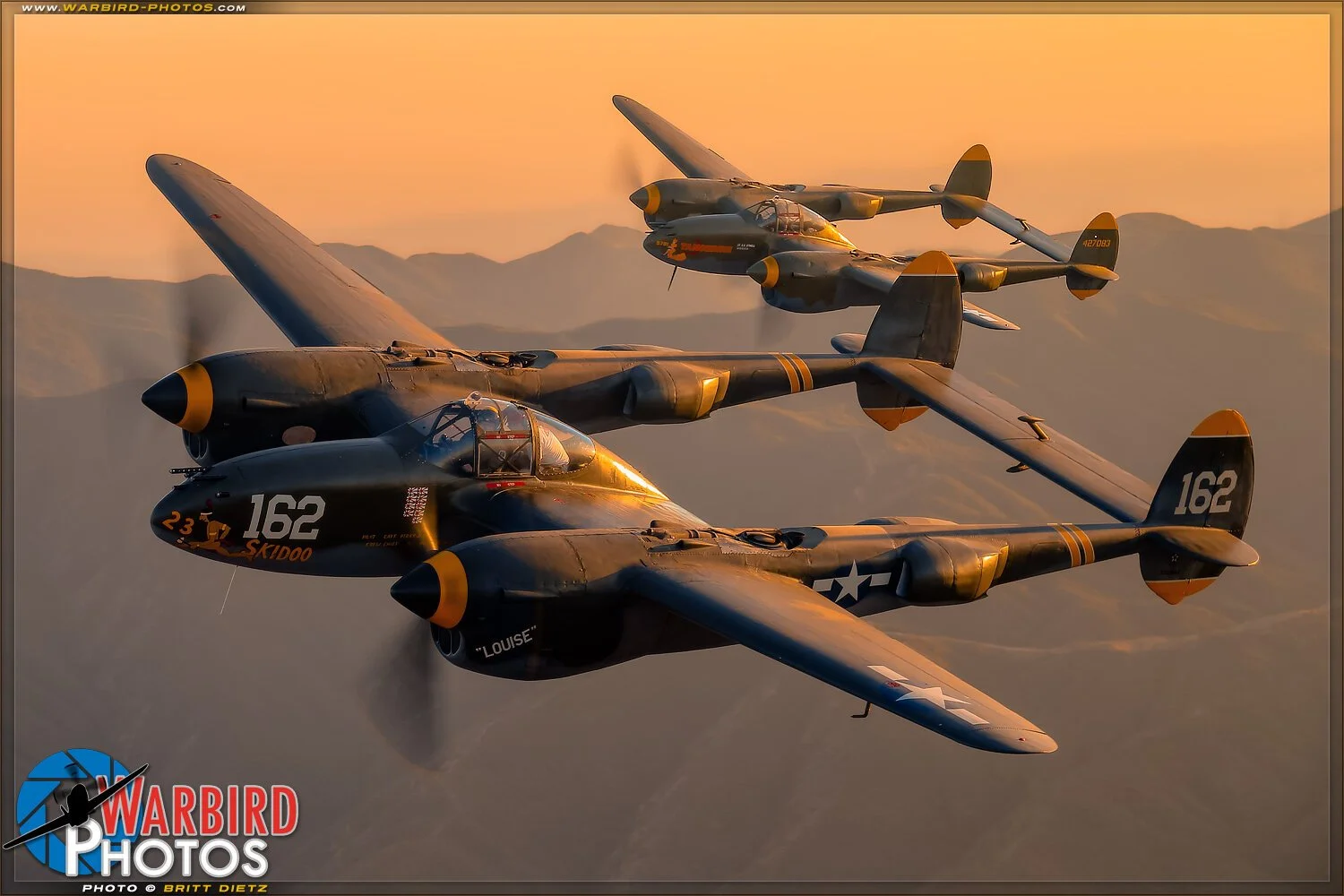
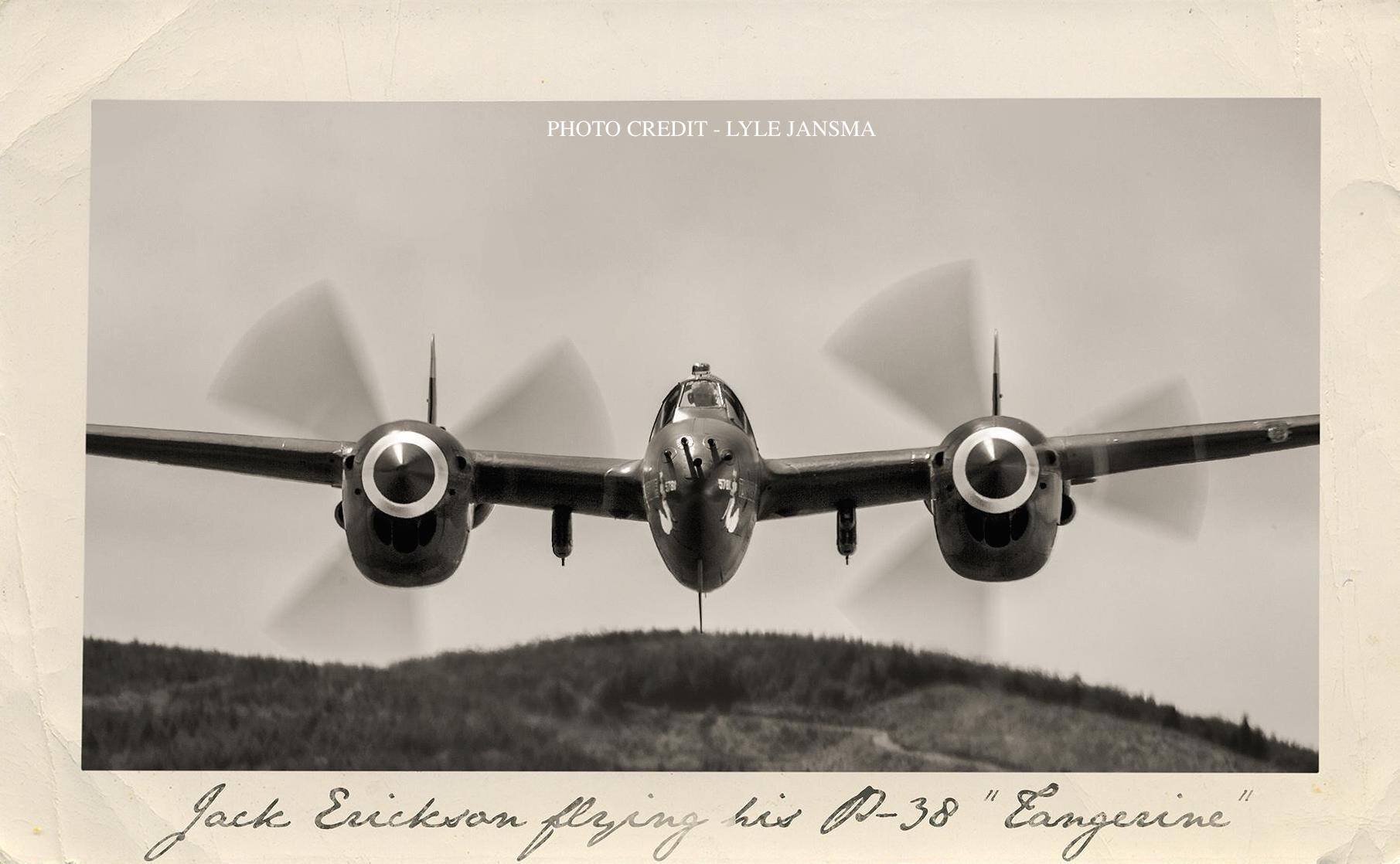
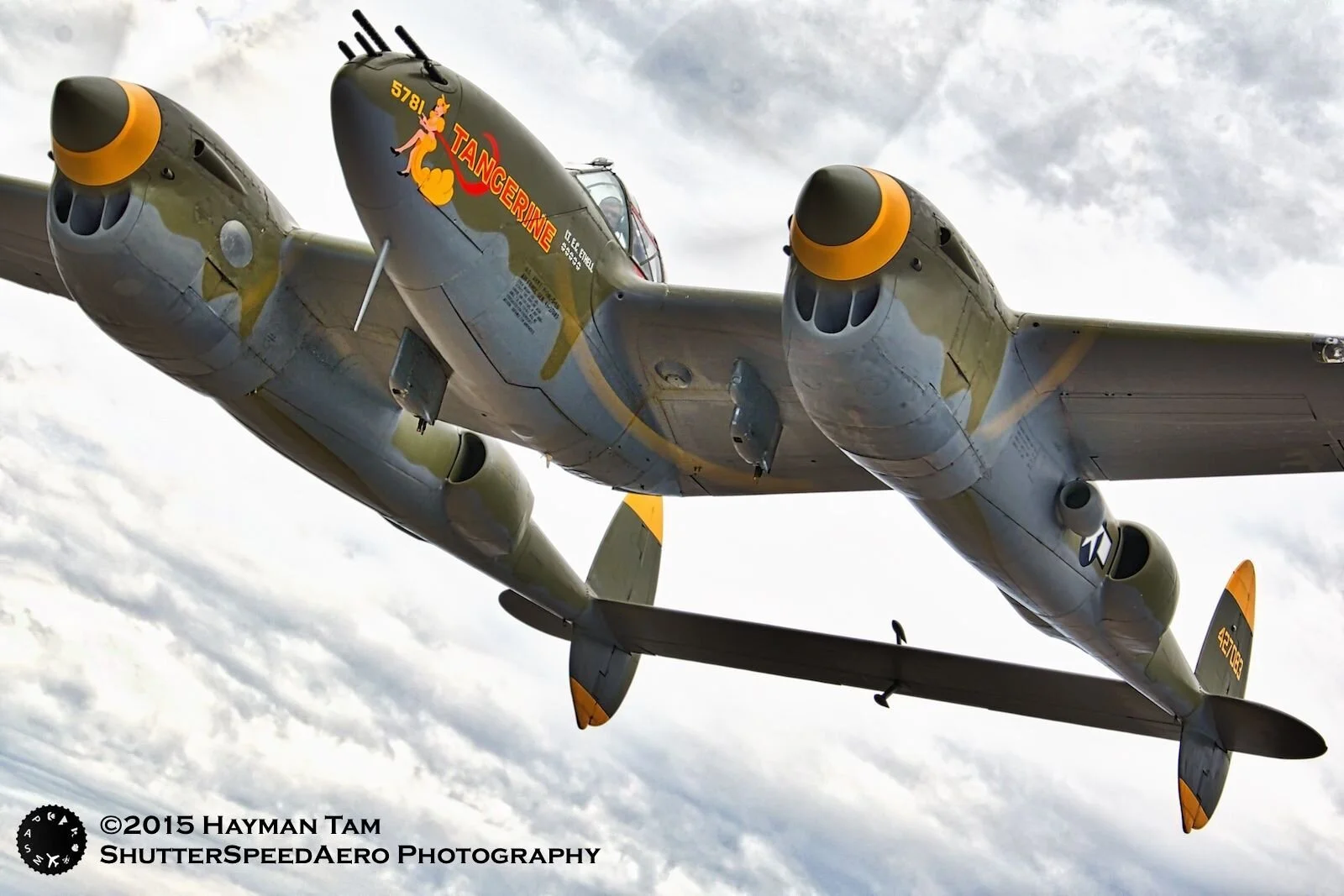
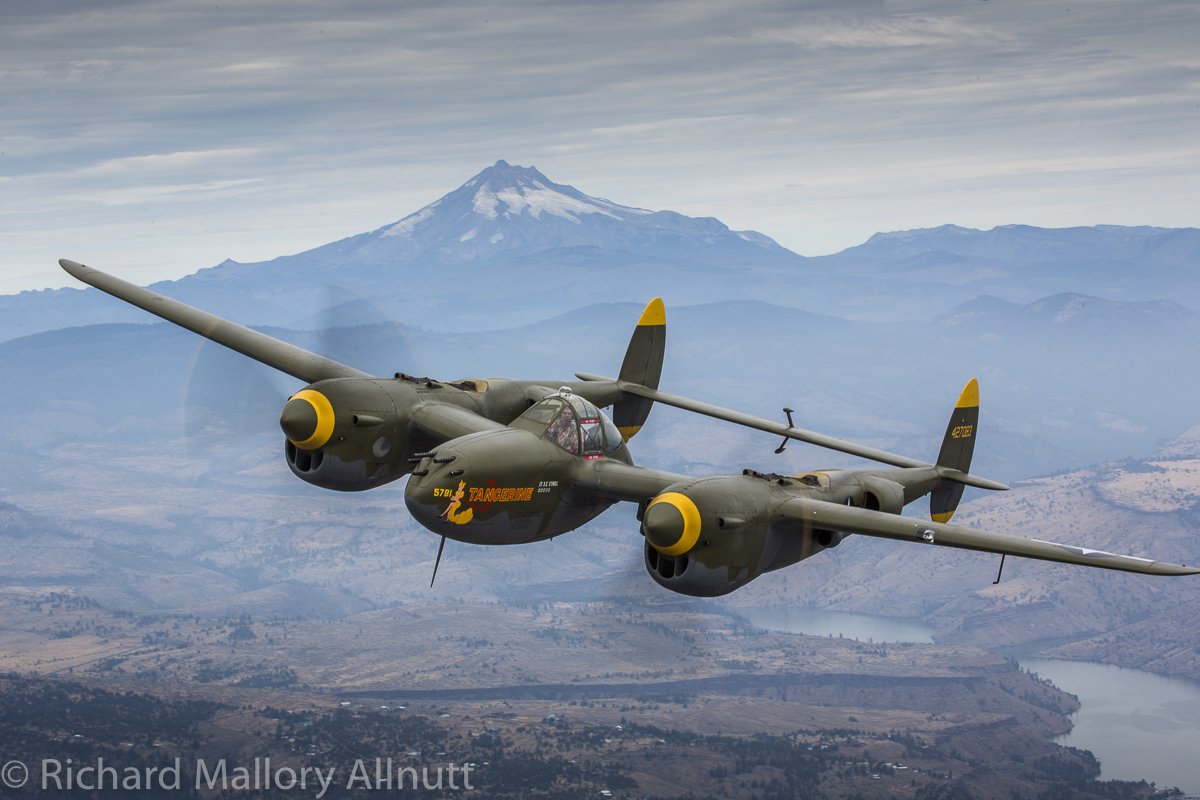
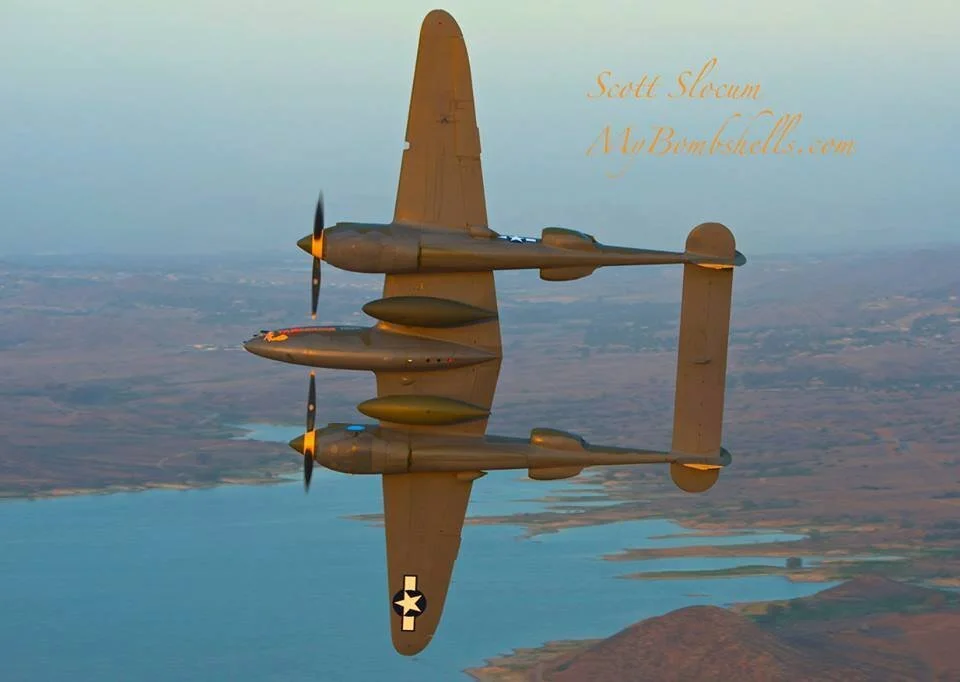
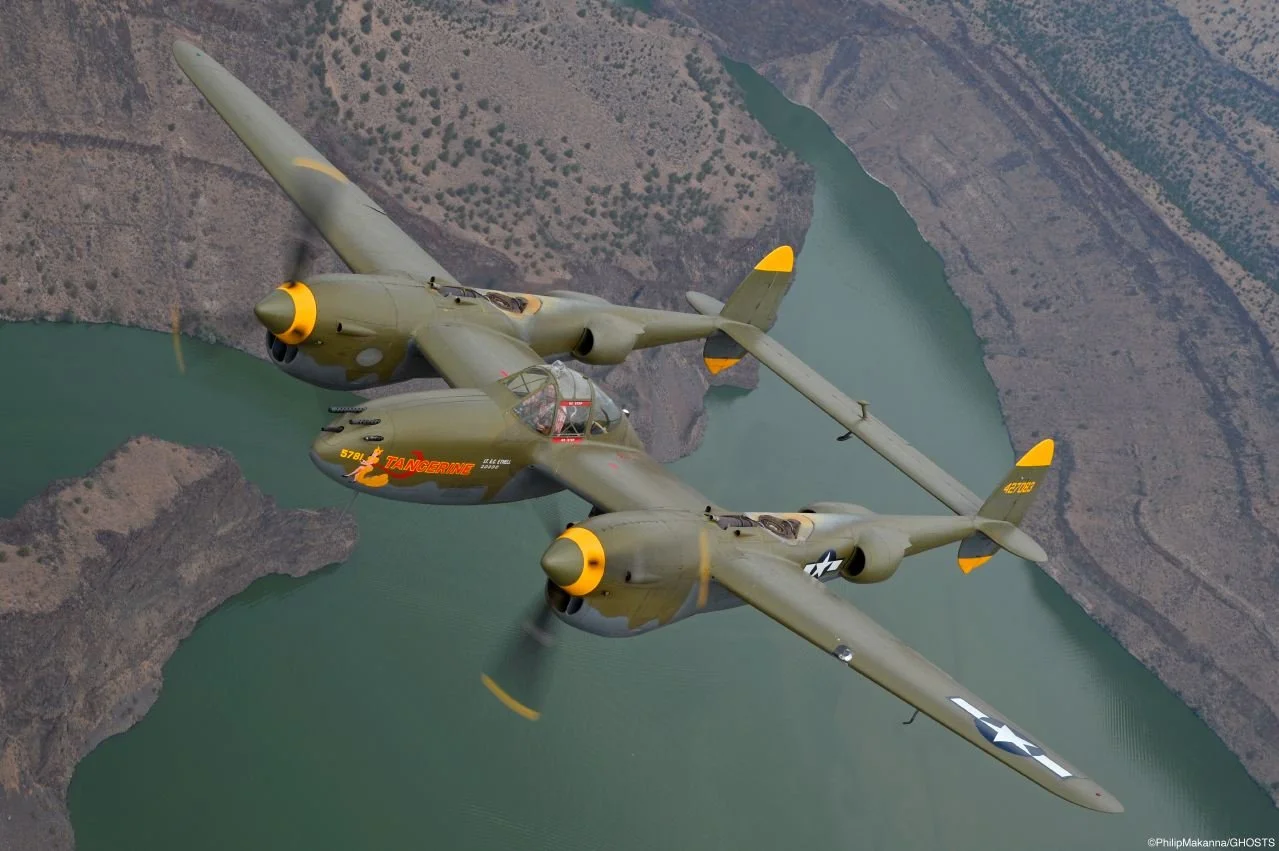
Because of its unique twin boom design, the Lockheed P-38 Lightning was the most easily recognized U.S. Army Air Force fighter in use during the Second World War. It accounted for more Japanese aircraft losses than any other American warplane and was nicknamed "the Fork-Tailed Devil" by the German Luftwaffe in the North Africa Theater. The Lightning was ideal as both a gunnery platform and a photo-reconnaissance airship because everything could be consolidated in the nose. With counter-rotating propellers and no torque, centrally concentrated firepower, twin-engine safety, hydraulically boosted ailerons and range, the P-38 was America’s first truly modern military aircraft.
SPECIFIC HISTORY
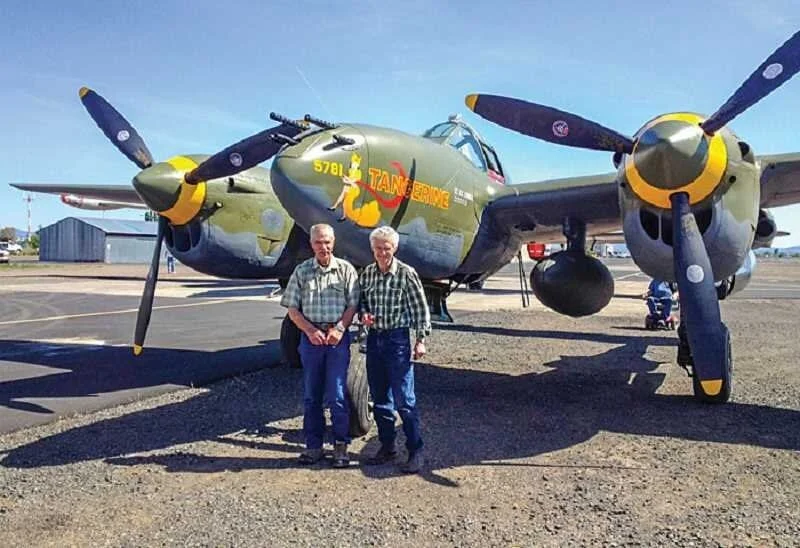
The Lightning on display was manufactured by Lockheed in the spring of 1944 as a P‑38L, S/N 44-27083, and then sent to Dallas where it was converted to a photo recon F‑5G‑6‑LO before being transferred to Tinker Field, Oklahoma. In January 1946 it was dropped from the U.S. Army Air Forces inventory and sold to civilian buyers ending up with Mark Hurd Aerial Surveys of Santa Barbara, California. Bruce Pruett of Livermore, California bought it from Hurd in 1968, essentially for scrap value. In 1990 Jack Erickson acquired it for the museum and in 1995 restoration was started, the first flight being made in early 1997.