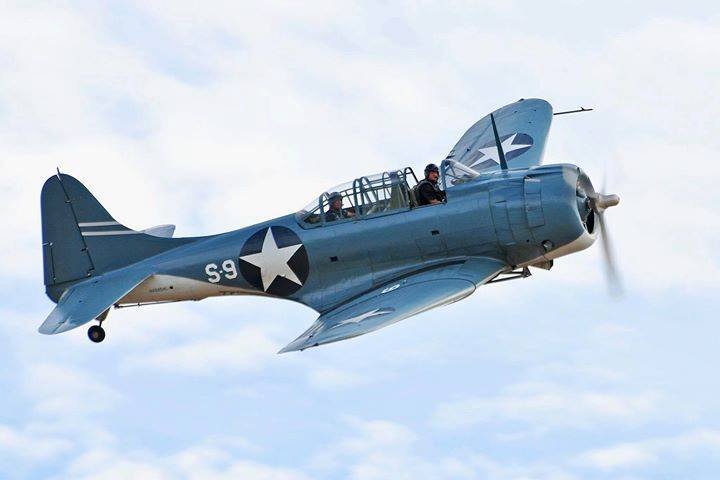
SBD DAUNTLESS
DOUGLAS a-24
Although eventually the most important dive-bomber flown by any combatant during WWII, the Dauntless began its combat career as a mediocre dive-bomber considered to be obsolete even before the United States entered the war. But for the Navy it was the principal carrier based dive-bomber in early World War II. This was the only U.S. aircraft to participate in all five naval engagements that were fought exclusively between aircraft carriers. Despite having been marked for retirement, the Dauntless sank more enemy shipping during 1942 than all other aircraft combined. In May of that year, SBD pilots from U.S. carriers were credited with 40 of the 91 enemy aircraft lost during the Battle of the Coral Sea. A month later, at Midway, SBDs sank three Japanese carriers and put another out of action. Their own attrition rate was the lowest of any carrier aircraft in the Pacific, due largely to an outstanding ability to absorb battle damage. Most importantly, the “Slow-But-Deadly” SBD destroyed the cream of the Japanese aircraft carrier fleet during the Battle of Midway. Considered to be the turning point in the Pacific War, it was credited with every confirmed hit on the enemy fleet. Ordered by the Navy in 1939, the first SBDs were delivered to the Marines and Navy carrier units in 1941. Some were produced for the Army as the A-24 Banshee. It also served with the British Royal Navy. Overall production of the Dauntless amounted to 5,936, yet the museum’s SBD is one of only a few surviving.
SPECIFIC HISTORY
It is an A-24 Army Banshee delivered in January 1943 and used as a gunnery target tug at Lakeland Air Field in Florida. Later declared surplus, it was employed as a mosquito control sprayer by the City of Portland from 1958 until 1965. It was sold to the museum in 1994 and restored to an SBD-3 as it appears today..