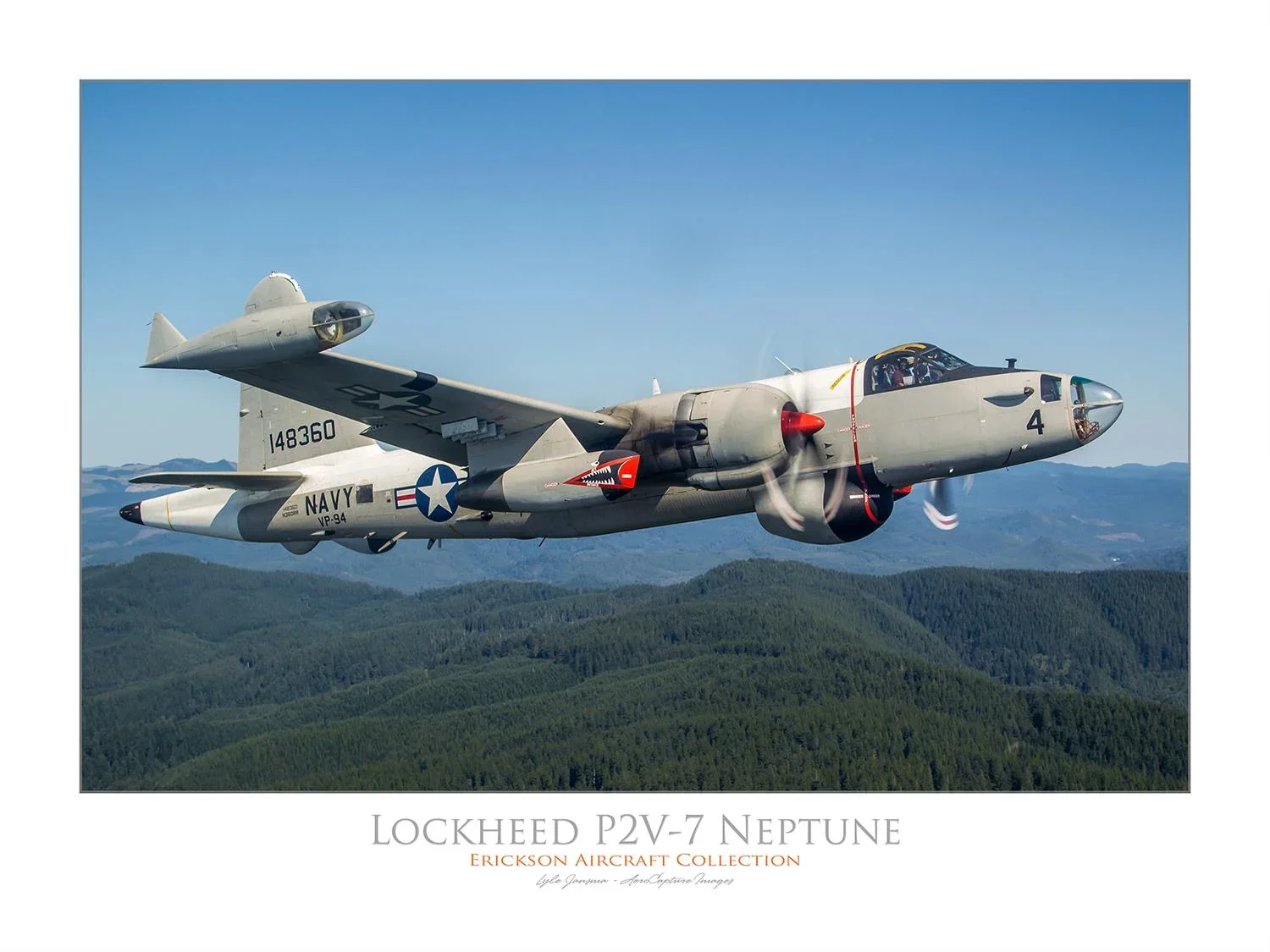
P2V-7 Neptune
NARRATIVE
The Lockheed P2V-7 Neptune was the last and most sophisticated derivative of the P2V models built for the U.S. Navy for a primary mission of anti-submarine warfare and a secondary mission of mining. First flown in 1954, it was the only production model of the Neptune to have underwing jet pods and to utilize the “Jezebel” and “Julie” submarine detection gear. 216 were produced and saw considerable service in Vietnam; used by the Navy for surveillance missions and by the Air Force for night attack. The P2V-7 followed the P2V-1 which was introduced originally to satisfy the Navy’s need for a greater range, load carrying ability and performance than that provided by flying boats. The P2V-1 was first flown in 1946 and various models of P2Vs were in service for nearly 30 years. They were the mainstay of the Navy’s land-based patrol squadrons until replaced by the Lockheed P-3 Orion. The last ASW Neptune, a P2V-7, made its final flight in February 1970 with Rear Admiral Davies, pilot of the “Truculent Turtle, as its co-pilot.
SPECIFIC HISTORY
The museum’s P2V-7 Anti-Submarine Patrol bomber is a true veteran of the Cold War and was one of the last of its type to serve in the United States Navy. It was accepted by the USN in October 1961 and over the next 16 years patrolled the Atlantic, Arctic, Pacific, and Mediterranean Oceans looking for and tracking submarines before being retired in 1977. It still retains much of its original radar and other submarine detection equipment.